
This process minimizes credit risk and ensures liquidity in the markets, enabling smooth and efficient operations. Mark-to-market (MTM) is a method of valuation used in both financial reporting and tax accounting. This technique requires certain assets and liabilities to be reported at their current fair market value, rather than their original historical cost. The difference between the asset’s cost and its market value is recorded as a gain or loss on the income statement for the period. For those engaged in active financial markets, understanding the mechanics of MTM is essential for managing year-end tax liability. MTM accounting prevents the accumulation of large, unexpected losses by requiring a continuous revaluation of positions.
- MTM principles apply across accounting standards, financial services firms, personal accounting, and investing.
- As an Investopedia fact checker since 2020, he has validated over 1,100 articles on a wide range of financial and investment topics.
- FASB has issued several accounting standards related to MTM, including FASB ASC Topic 815.
- Mark to Market accounting is considered necessary in order to provide investors and other market participants with an objective and accurate representation of a company’s assets and liabilities.
- Be prepared to convince the IRS that your investments have “no connection” to your trading business; otherwise, you’ll be required to mark them to market at year’s end and report any gains as ordinary income.
Mark to Market Examples in Futures
- With MTM, companies can also list their profits as projections, rather than actual numbers.
- Rather than listing items on your balance sheet at their original cost, MTM alters the value according to current market conditions.
- When it was first built, it was valued at $500k , but after a decade, the wear and tear on the equipment has reduced the fair market value of the facility to $350k.
- The basis of each holding is then adjusted to reflect these hypothetical gains and losses for tax purposes.
- Mark-to-market accounting in real estate accounting means valuing real estate assets based on the price the property would sell for if it were sold today.
This activity must be contribution margin the principal source of income or a substantial commitment of the taxpayer’s time and resources. For some, MTM is the obvious solution to the time-consuming task of tracking wash sales. For others, the ability to fully deduct their losses in the year they occur can make a big difference starting out. Oddly enough, traders who close their positions daily may not ever have to go through the MTM since there is typically nothing left at year’s end to reclassify. Be prepared to convince the IRS that your investments have “no connection” to your trading business; otherwise, you’ll be required to mark them to market at year’s end and report any gains as ordinary income. One of the most important decisions you will make as a trader is whether to elect the mark-to-market (MTM) accounting method.
Mark-to-Market Accounting Method for Pension Accounting

Available for sale securities are the most common example of mark to market accounting. An available-for-sale asset is a financial security that can either be in debt or equity purchased to sell the securities before it reaches maturity. In cases of securities that do not have a maturity, these securities will be sold before a long period for which these securities are generally held. In case of derivatives, there is the implementation of this method on futures contract everyday. The difference in valye between the buy and sell position is analysed to calculate the profit or loss.
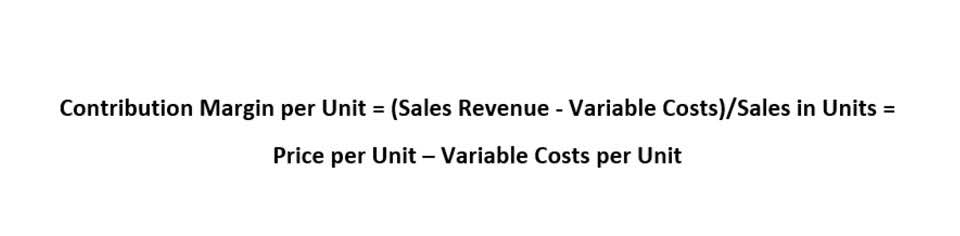
What Does Residual Income Mean and How Does It Work?
- This aims to represent a realistic present-day valuation as compared to historical cost accounting.
- A trader must keep detailed records to distinguish the securities held for investment from the securities in the trading business.
- Tax laws are complex and subject to change, and every trader’s situation is unique.
- Basing figures on real-time market values can significantly affect your bottom line, which might surprise you initially.
- Unlike historical cost accounting, which records assets at their original purchase price, mark-to-market aims to provide a more accurate picture of financial positions in the context of present-day conditions.
Mark-to-market accounting is the opposite of historical cost accounting, which uses the asset’s original cost to calculate its valuation. A trader who has not made the mark-to-market election can deduct only $3,000 of net capital loss, with the excess loss carrying Law Firm Accounts Receivable Management forward only, not back to earlier, profitable years. If you make the election, your trading loss isn’t subject to this limitation, and can carry back as well as forward. This is done most often in futures accounts to ensure that margin requirements are being met. If the current market value causes the margin account to fall below its required level, the trader will be faced with a margin call.
Market Volatility
It is commonly applied to liquid securities with readily available market prices like stocks and bonds. But other assets like fixed assets, intangibles, or advances may be excluded from MTM requirements, as estimating fair value can be difficult or yield counterintuitive results in such cases. The mark-to-market method in accounting values assets based on momentary market conditions, also known as fair value. The value is calculated based on how much a company can make if it sells the asset today. While every business and organization relies on assets, their value fluctuates over time, often subjected to market volatility, especially in the case of financial instruments. This is where mark-to-market accounting comes in to, well, account for those fluctuations and provide a more accurate picture of an organization’s financial situation.
Insider Trading vs. Market Rumors in Day Trading
Tax Court rulings established that a mark to market accounting trader must devote a significant portion of their workday to the activity, including research, analysis, and execution. The taxpayer must demonstrate that the activity is carried out in a businesslike manner, utilizing appropriate equipment, software, and record-keeping systems. Merely executing a large number of trades through a personal brokerage account does not satisfy the trade or business requirement. It establishes two distinct groups that deal with securities and must or may utilize the MTM method. The first group comprises securities dealers, who are legally required to use MTM for all securities held in their capacity as a dealer. If you find yourself carrying forward a capital loss or have other questions relating to mark-to-market accounting, be sure to visit Traders Accounting.
Recent Comments